The Basics of the Rich Symbolism of Māori Art in New Zealand
2026-01-15

You don’t look at Māori carving or weaving or kōwhaiwhai simply because it’s beautiful; you experience it. The story it carries predates modern New Zealand, yet continues to define it. There's passion and rich tradition in every piece of Māori art. It's not a cultural side-note, but a structural voice in what New Zealand is and how New Zealand speaks.
Below, we'll explore the basics of the rich symbolism of Māori art in New Zealand.
An Introduction to Māori Art
Māori art is not one category. It includes:
- Carving (whakairo)
- Weaving (raranga)
- Painting
- Tā moko (marking of the skin)
- Adornments
- Ceremonial forms
Each follows a protocol. It's teaching and meaning rather than style. For example, carving is a simple sculpture. It is history made visible in wood or bone. Neither is raranga weaving. It's a narrative form structured through harakeke (flax), whakapapa, and a rich community heritage.
The idea that Māori art is purely symbolic simplifies it too much. Yes, the works hold symbols, but those symbols are inseparable from identity:
- Kinship groups
- Cosmology
- Memory
You can’t detach the object from the people who made it or the land that gave its material.
Traditional Māori Patterns and Their Meanings
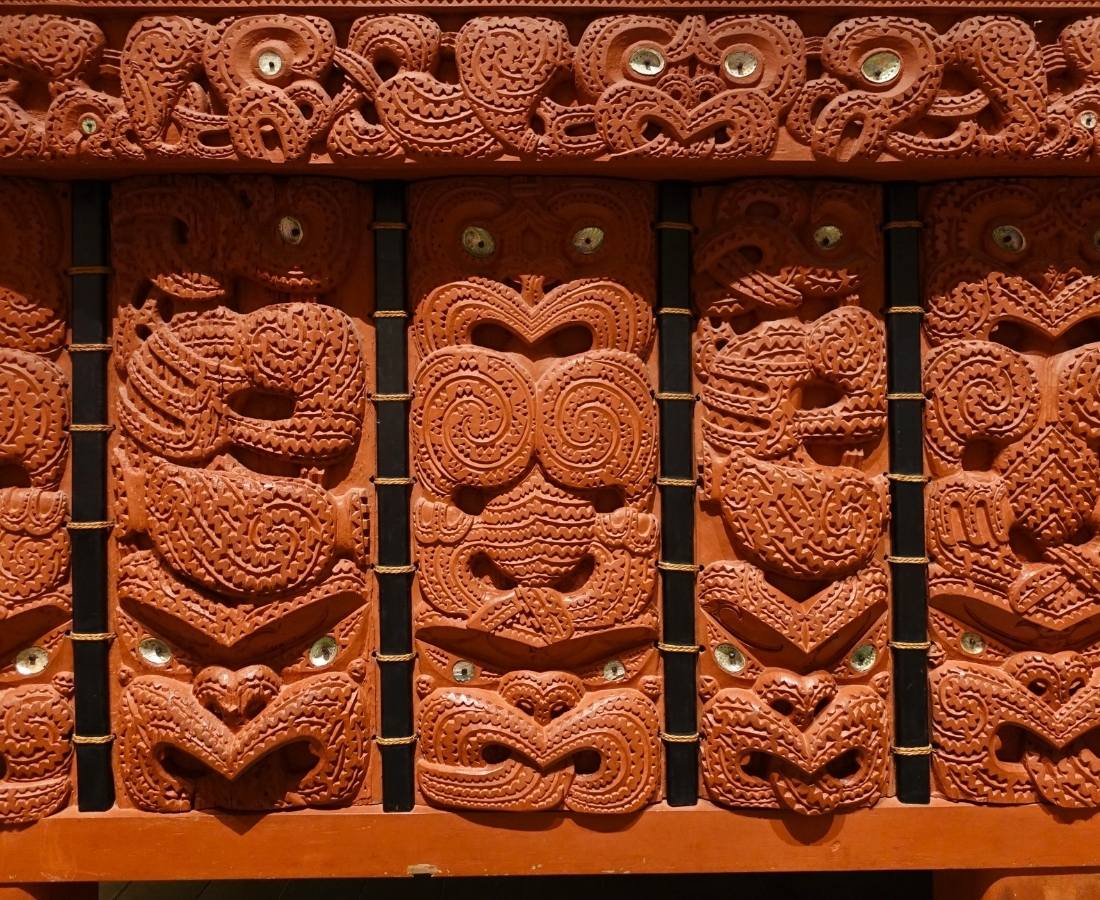
Specific inherited visual forms appear throughout Māori art. Koru, niho taniwha, poutama, and roimata are the perfect examples. They might seem like simple patterns, but they're generations of understanding.
The meaning behind these traditional patterns (they're some of the most common) is:
Koru: the unfurling fern frond. It's the beginning of life and renewal.
Poutama: the step-like pattern symbolising life’s learning, growth, and upward movement.
Niho taniwha: triangles that represent strength, guardianship, stories of deep waters, and ancestors who protect.
These aren’t decorative motifs for visual texture. They are shorthand for human positioning in the world. They're our place in relation to others, land, and time.
Aspects of Symbolism and Composition in Māori Art
The symbolism and meaning in Māori art is evident and alive within the work. The composition you see in a carved panel or tā moko design isn’t simply aesthetic balance - it is whakapapa structure. Many works show:
- Descent lines
- Spiritual forces
- Guardianship
- Journeys
- Ancestors
Perhaps one of the most important aspects of Māori art is color. Deep red, black, and white have rich symbolism within the Māori visual tradition.
- Red for earth, blood, life force
- Black for potential, possibility, Te Kore (the void), and spiritual grounding.
- White for enlightenment and clarity.
They combine to create the most vibrant pieces of artwork. The patterns will almost always combine with at least one of these colors to tell a story.
What the Rich Māori Art Tradition Means for New Zealand
Māori art is a constant thread of history. It shapes everything. Māori art is an expression of identity, how land is connected to people, and how architecture incorporates story. You see it in wharenui panels, in public mural work, in moko kauae, in weaving that symbolizes ceremony and contemporary exhibition.
New Zealand's global creative reputation is often linked to landscape and innovation, but the foundation layer underneath both is Māori visual language. It gives the country its distinct character. Not borrowed, not designed, not imported, but inherited and continuous.
Some of the best places to see the rich Māori art are:
- Waitangi Treaty Grounds
- Auckland Museum
- Te Pa Tu - The Gathering Place
- Te Papa
- Rotorua
- Kaikōura
To understand Māori art is to understand New Zealand. It was already formed, already narrated, already patterned before contemporary nationhood arrived. If you can, seeing original pieces of Māori art on display in places like the Auckland Museum is so much better than seeing them online.

